

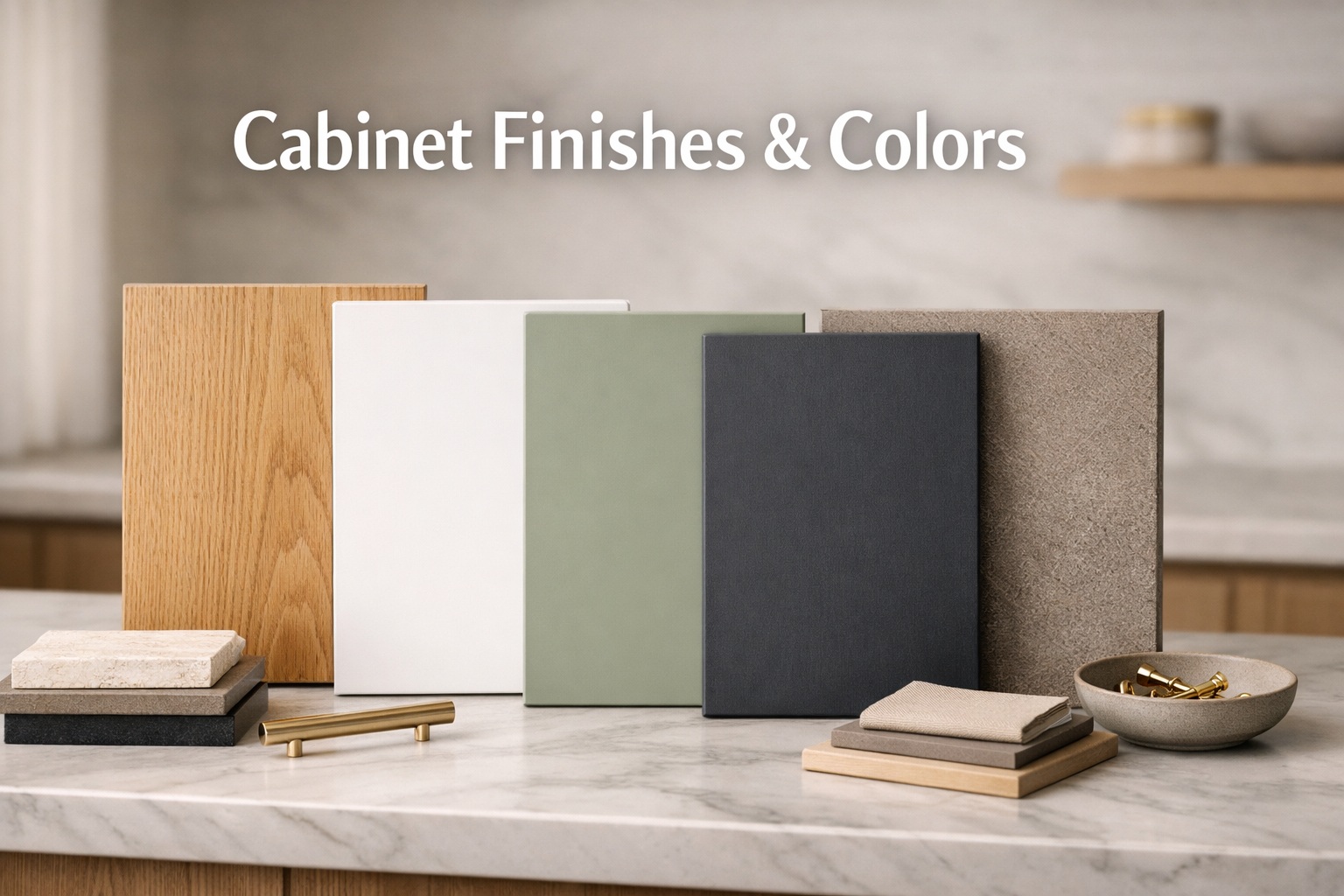
You’ve picked your cabinet style and layout. Now comes the decision that’ll define your kitchen’s entire look: finish and color.
Here’s what makes this hard: you’re making a choice you’ll live with for 10-20 years based on photos in magazines and small door samples. The white cabinets that look crisp in the showroom might feel sterile in your actual kitchen. The trendy navy might be dated in five years. That beautiful natural wood stain shows every fingerprint.
I’ve watched people agonize over this decision, then either nail it or deeply regret it. The difference comes down to understanding what you’re actually choosing—not just color, but maintenance requirements, durability, how it ages, and whether it fits your real life versus Pinterest ideals.
This guide covers cabinet finishes and colors from every angle—current trends and timeless classics, painted versus stained, matte versus glossy, durability and maintenance, how to choose colors that work with your space, and the mistakes that lead to regret.
Let’s pick finishes you’ll still love in a decade.
Understanding Cabinet Finish Types
Before choosing colors, understand what “finish” actually means.
Painted Finishes
What it is: Opaque paint applied to cabinet doors and boxes. Hides wood grain completely.
Substrate: Usually MDF or maple (smooth surfaces take paint best).
Color range: Literally any color you can imagine. Want chartreuse cabinets? Paint can do it.
Look: Smooth, uniform, contemporary. Can be matte, satin, or glossy.
Maintenance: Shows dirt and grease. Needs occasional cleaning. Can chip or scratch.
Durability: Good if properly applied. Quality matters enormously.
Stained Finishes
What it is: Transparent or semi-transparent stain that colors wood while showing grain.
Substrate: Real wood only (oak, maple, cherry, walnut, etc.). Stain needs grain to show.
Color range: Limited to wood tones—light to dark browns, reds, grays. Can’t do blue or green stained cabinets.
Look: Natural, warm, traditional to transitional depending on wood and stain color.
Maintenance: Hides dirt better than paint. Scratches less visible.
Durability: Excellent. Wood is naturally durable and ages well.
Thermofoil Finishes
What it is: Vinyl film heat-sealed over MDF. Looks smooth like paint but is actually plastic.
Substrate: MDF core with vinyl wrap.
Color range: Common colors (white, cream, grays). Limited compared to paint.
Look: Very uniform. Can mimic painted or wood grain appearance.
Maintenance: Easy to clean, resists moisture better than paint.
Durability: Can peel if exposed to heat (near ovens, dishwashers). Damaged areas can’t be touched up—entire door needs replacement.
Laminate Finishes
What it is: Thin plastic sheet bonded to substrate. Similar to thermofoil but different application.
Substrate: Usually particleboard or MDF.
Color range: Wide variety including wood-look patterns.
Look: Uniform, modern. Higher-end laminates look surprisingly good.
Maintenance: Very easy. Wipes clean, resists moisture and stains.
Durability: Good for daily use. Edges can chip. Can’t be refinished—damage means replacement.
Current Trends vs. Timeless Classics
Fashion changes. Kitchens last. Choose wisely.
Trending Now (2024-2026)
Two-tone cabinets: Upper cabinets in one color (often white or light), lowers in another (navy, gray, natural wood). Creates visual interest and breaks up monotony.
Warm whites and creams: Pure white is giving way to softer, warmer whites with cream or gray undertones.
Natural wood tones: Especially lighter woods (white oak, maple) or dramatic darker woods (walnut). Real wood grain is back.
Deep colors: Navy, forest green, charcoal. Rich, sophisticated alternatives to basic white.
Matte and flat finishes: Moving away from shiny toward softer, more natural-looking surfaces.
Timeless Classics That Always Work
White cabinets: Yes, they’re trendy now. But white has been popular for 100+ years because it works. Light, bright, clean-looking.
Natural wood stains: Wood never truly goes out of style. Medium browns in particular (cherry, maple) are always appropriate.
Gray cabinets: Might feel trendy now but gray has proven staying power. Neutral, sophisticated, works with many styles.
Off-white/cream: Warmer than white, softer than bold colors. Adaptable to changing styles.
Trends to Approach Cautiously
Very bold colors: Bright yellow, red, orange cabinets. Fun initially but harder to live with long-term.
Ultra-modern finishes: High-gloss lacquer, metallic finishes. Can look dated quickly.
Extreme contrasts: Black uppers with white lowers. Makes strong statement but limits design flexibility.
Instagram trends: That specific shade of sage green everyone’s doing this year? Proceed carefully.
Reality check: Trends are fun for pillows and paint colors (easy to change). Cabinets last 15-20 years. Lean toward timeless with trendy accents rather than fully trendy cabinets.
Painted Cabinets: What You Need to Know
Most people choose painted cabinets. Here’s what that actually means.
Paint Quality Levels
Builder-grade paint: Sprayed finish, adequate durability. Will show wear in 5-7 years in high-use areas.
Standard paint: Better coverage, more durable topcoat. Should last 10+ years with normal use.
Premium/conversion varnish: Professional-grade finish. Very durable, resists moisture and chemicals. Lasts 15+ years easily.
Cost difference: Builder-grade included in basic cabinets. Premium finish adds $1,000-$3,000 to typical kitchen.
Worth it? For kitchen cabinets, yes. For rarely-used spaces, builder-grade is probably fine.
Sheen Options
Matte/flat: No shine. Modern look. Shows dirt and grease more. Harder to clean.
Satin: Slight sheen. Good middle ground. Easier to clean than matte, not shiny.
Semi-gloss: Noticeable shine. Very easy to clean. Can look a bit too shiny/plastic for some tastes.
High-gloss: Very shiny, reflective. Ultra-modern look. Shows every imperfection.
Most popular: Satin. Balances appearance and practicality.
Color Selection for Painted Cabinets
White (and white-ish):
- Pure white: Bright, clean, can feel cold or sterile
- Warm white: Cream undertones, softer, cozier
- Cool white: Gray undertones, modern, crisp
Gray:
- Light gray: Soft, neutral, sophisticated
- Medium gray: Bold enough to notice, still neutral
- Charcoal: Almost black, dramatic
Colors with personality:
- Navy blue: Rich, classic, sophisticated
- Forest green: Natural, elegant, current
- Black: Dramatic, requires commitment
Testing: Buy sample pots. Paint large poster boards. Look at them in your actual kitchen in morning, afternoon, and evening light. Colors change dramatically with lighting.
Understanding complete design approaches helps you see how cabinet finish integrates with overall kitchen aesthetic.
Painted Cabinet Maintenance
Daily/weekly: Wipe down with damp cloth. Dish soap for greasy areas.
Avoid: Abrasive cleaners, scouring pads, excessive water.
Touch-ups: Paint can be touched up but color-matching aged paint is tricky.
Repainting: Cabinets can be repainted but it’s expensive ($3,000-$8,000+ professionally). Factor this into long-term costs.
Stained Wood Cabinets: Natural Beauty
Stained wood has different considerations than paint.
Wood Species and Stain Color
Light woods (maple, birch):
- Take stain evenly
- Can go light or dark
- Show less grain
- Modern or traditional depending on stain
Medium woods (oak, hickory):
- Prominent grain
- Beautiful natural character
- Can be stained but grain always shows
- Traditional to craftsman style
Dark woods (cherry, walnut):
- Rich, luxurious appearance
- Less staining needed (natural color is already deep)
- Formal, elegant feeling
- Age to deeper colors over time
Stain colors:
- Natural: Minimal stain, shows true wood color
- Honey/golden: Warm, traditional
- Medium brown: Classic, versatile
- Dark espresso: Dramatic, sophisticated
- Gray stain: Contemporary take on natural wood
Stained Cabinet Durability
Advantages:
- Scratches and wear less visible than on paint
- Ages gracefully (develops patina)
- Can be refinished (sanded and re-stained)
- Very durable with proper topcoat
Disadvantages:
- Can’t change color easily (refinishing required)
- Darker stains show dust more
- Some woods darken with age (cherry gets redder)
Maintenance: Easier than painted. Wipe with damp cloth. Wood cleaner occasionally. Scratches buff out or blend into grain pattern.
Modern vs Traditional Stain Approaches
Traditional: Warm browns, red tones, prominent grain (oak). Pairs with traditional door styles.
Contemporary: Light natural woods or gray-toned stains, less prominent grain (maple). Pairs with flat-panel doors.
Transitional: Medium browns, balanced grain, can work with various door styles.
Specialty Finishes Worth Considering
Beyond basic paint and stain, other options exist.
Glazed Finishes
What it is: Semi-transparent glaze applied over paint or stain, then partially wiped off. Settles into details and edges.
Effect: Adds depth, highlights details, creates aged or antique look.
Best for: Traditional styles, cabinets with lots of detail work.
Maintenance: Same as underlying finish (painted or stained).
Distressed Finishes
What it is: Intentional wear marks, sand-through at edges, antiquing.
Effect: Aged, rustic, farmhouse appearance.
Consideration: Adds cost ($500-$1,500+ for kitchen). Love-it-or-hate-it aesthetic.
Durability: Ironically, very durable because it’s meant to look worn.
Pickled or Whitewashed
What it is: White or very light stain over wood, grain still visible.
Effect: Light, airy, beachy or Scandinavian vibe.
Best for: Informal spaces, casual kitchens.
Trend factor: Currently popular but could date.
Matching Finishes to Your Home
Cabinet finish should work with your house, not fight it.
Architectural Style Considerations
Traditional homes: Natural wood stains, classic whites, glazed finishes work. Bold modern colors feel out of place.
Modern/contemporary homes: Clean painted finishes (white, gray, black), light natural woods. Heavy traditional stains feel wrong.
Transitional homes: You have freedom. Almost any finish can work if executed well.
Farmhouse/rustic: Natural woods, warm whites, distressed finishes fit the style.
Existing Elements You Can’t Change
Flooring: If you have red oak floors, cherry cabinets might clash. Consider woods with different undertones or go painted.
Countertops: Your countertop selection affects cabinet color. Dark cabinets + dark counters can feel heavy. Light + light might lack contrast.
Backsplash: Busy tile backsplash calls for simpler cabinet finish. Plain cabinets let decorative backsplash shine.
Appliances: Stainless appliances work with anything. Black appliances look better with darker cabinets or strong whites. White appliances need white or light cabinets.
Lighting and Space Considerations
Small kitchens: Lighter cabinets make space feel larger. Dark cabinets can close in the space.
Dark kitchens: Limited natural light? Light cabinets reflect light and brighten space.
Large kitchens: Can handle darker or bolder cabinet colors without overwhelming.
Direction of light: North-facing kitchens (cool light) benefit from warm cabinet colors. South-facing (warm light) can handle cooler tones.
Durability and Maintenance Comparison
How finishes hold up to real-world use.
High-Traffic Areas
Kitchen cabinet faces (doors, most-touched areas):
- Painted: Shows wear, needs cleaning, may need touch-ups
- Stained: More forgiving, hides minor wear
- Laminate/thermofoil: Easy to clean, durable
Cabinet interiors:
- Usually melamine or simple finish
- Less critical—not visible daily
- Durability still matters for long-term use
Heat and Moisture Exposure
Near sink:
- Paint: Can peel if moisture penetrates
- Stain with quality topcoat: Handles moisture well
- Thermofoil: Good moisture resistance until it starts peeling
Near oven/range:
- Paint: Handles heat fine if quality finish
- Stain: Excellent heat tolerance
- Thermofoil: Can peel from heat exposure—not recommended near cooking
Dishwasher area:
- Steam exposure is real concern
- Quality finishes (paint or stain) handle it
- Cheap finishes fail here first
Cleaning and Chemical Resistance
Best: Laminate, quality painted finishes with hard topcoats
Good: Stained wood with polyurethane topcoat
Moderate: Standard painted finishes, thermofoil
Consider: What cleaners do you actually use? Harsh chemicals require more durable finishes.
For bathroom vanity cabinets, moisture resistance becomes even more critical than in kitchens.
The Two-Tone Cabinet Trend
Mixing finishes is popular. Here’s how to do it right.
Common Two-Tone Combinations
White uppers + colored or wood lowers: Most popular approach. Keeps room light, adds interest at base.
Colored uppers + white lowers: Less common but can work. Makes upper cabinets statement piece.
Island in different color: Rest of kitchen one color, island another. Creates focal point.
Natural wood uppers + painted lowers: Warm wood on top, clean painted base. Transitional look.
Rules for Successful Two-Tone
Complement, don’t clash: Colors should work together. Test samples side by side.
Consider proportions: If your kitchen is mostly uppers, that color dominates. Choose accordingly.
Maintain consistency: If doing two-tone, apply it consistently. Don’t randomly mix colors.
Think long-term: Twice as much color commitment. Make sure you love both colors.
Alternative approach: Single color cabinets, different color island. Simpler and safer.
Making Your Final Decision
Framework for actually choosing.
The Three-Filter Test
Filter 1 – Lifestyle:
- Neat freak who cleans constantly? Paint is fine.
- Casual household with kids? Stain or darker paint hides dirt better.
- Cook a lot with greasy foods? Consider how much cleaning you’ll tolerate.
Filter 2 – Longevity:
- Planning to stay 5+ years? Choose what you love.
- Selling soon? Choose broadly appealing (whites, light grays, natural wood).
- Forever home? Pick for yourself, not hypothetical future buyers.
Filter 3 – Budget:
- Painted finishes: Moderate cost, will eventually need repainting
- Stained wood: Higher initial cost, longer-lasting
- Thermofoil/laminate: Lower cost, limited refinishing options
The Sample Process
Step 1: Narrow to 3-5 options based on filters above.
Step 2: Get actual door samples in those finishes. Not just color chips—actual cabinet door pieces.
Step 3: Live with samples for a week. Lean them against walls in your kitchen. Look at different times of day.
Step 4: Show samples to household members. Get consensus.
Step 5: Make decision. Don’t second-guess—you’ve done the work.
When to Get Professional Help
Cabinet designers: Help navigate options based on your space, style, budget. Worth the consultation fee for major projects.
Interior designers: If you’re doing complete home renovation, designer ensures cabinet finish works with everything else.
Color consultants: Specialize in paint colors. Can help if you’re paralyzed by options.
Experienced kitchen specialists have seen hundreds of kitchens and know what finishes hold up and which don’t.
Common Mistakes to Avoid
Learn from others’ regrets.
Mistake 1: Choosing Purely on Trend
Why it’s bad: Trend fades, you’re stuck with dated cabinets.
Fix: Choose timeless base, add trendy elements in changeable ways (hardware, decor, backsplash).
Mistake 2: Not Testing in Actual Light
Why it’s bad: Showroom lighting is not your kitchen lighting. Colors look completely different.
Fix: Bring samples home. Look at them in your space.
Mistake 3: Ignoring Maintenance Reality
Why it’s bad: High-maintenance finish you won’t maintain looks terrible quickly.
Fix: Be honest about cleaning habits. Choose finish that matches reality.
Mistake 4: Too Matchy-Matchy
Why it’s bad: Cabinets same color as walls and flooring creates boring, flat space.
Fix: Create contrast. Different shades, different finishes, visual interest.
Mistake 5: Choosing for Resale Over Preference
Why it’s bad: Living with cabinets you don’t love to please hypothetical future buyers.
Fix: Unless selling within two years, choose what you want. Generic white kitchens don’t add that much value.
Mistake 6: Skimping on Finish Quality
Why it’s bad: Cheap painted finish looks terrible after two years. False economy.
Fix: Budget for quality finish. It’s visible every day and needs to last.
Understanding cabinet construction quality matters as much as finish—beautiful finish on poorly-built boxes is still a bad investment.
The Bottom Line
Cabinet finish and color define your kitchen’s entire aesthetic. It’s the most visible choice you make.
Trends are fun but timeless is smart. Whites, grays, and natural wood tones work across decades. Bold colors and ultra-trendy finishes might thrill you now but could frustrate you in five years.
Match finish durability to your actual use. High-maintenance finishes need maintenance—if you won’t provide it, choose something more forgiving.
Test extensively. Samples in your actual space with your actual lighting. Don’t trust showrooms or Pinterest.
Consider the whole picture—cabinets work with countertops, floors, walls, appliances. They don’t exist in isolation.
And remember: you’re not choosing for the Instagram photo. You’re choosing for 15-20 years of daily life. Pick something you’ll still appreciate when the novelty wears off and it’s just part of your everyday routine.
That’s when truly good choices reveal themselves.
Leave a Reply